The shape of stories

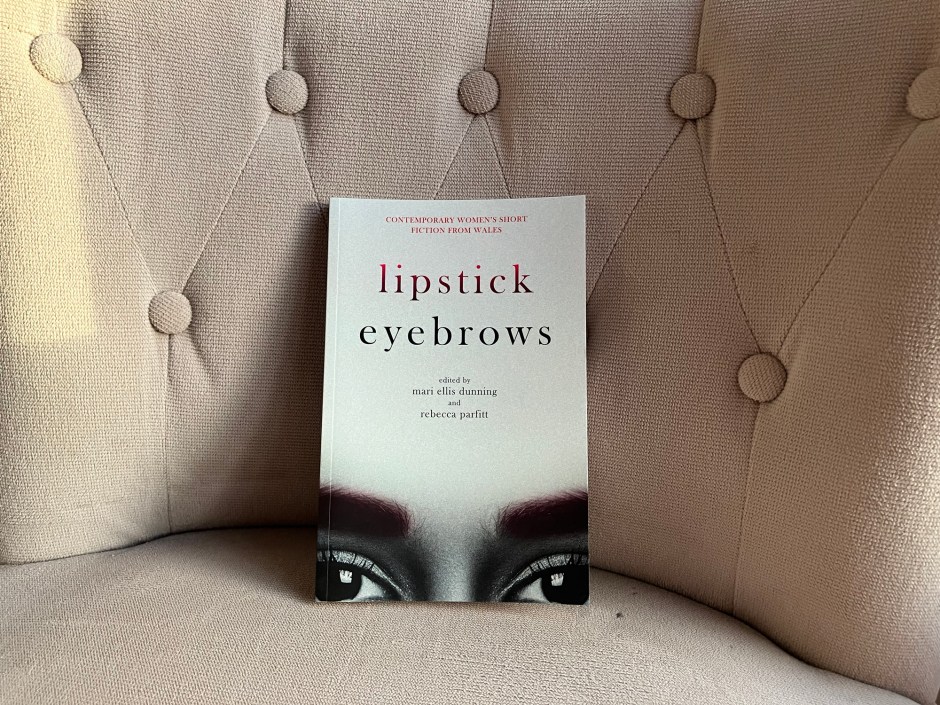
One of my short stories, ‘Something about Weddings’, came out last month in a collection called Lipstick Eyebrows, released by the Welsh publisher Honno. I won’t lie: it was very exciting receiving my complimentary author’s copies in the post, and flipping through to see my name printed on page 81.

This short story, which I sent in response to a call-out earlier this year, is one that I started writing in December 2016. I was a PhD student in Creative Writing at Cardiff University, still at the start of my journey, and I’d been invited, along with the rest of my cohort, to go to Gregynog Hall, in mid-Wales, for a writing retreat. Two and a half days of writing workshops, of lovely food, of exploring the grounds and taking advantage of our free time to write.

I had been to Gregynog once before, but it was different as a PhD student, less regimented. As an MA student, I sat in a classroom for long stretches of time, being taught various things and encouraged to write and experiment. As a PhD student, I took a walk with a friend and watched the horses in the nearby fields. I explored hidden nooks and corners of the old house, found tucked-in places to write.

Gregynog Hall a year later, in December 2017.

I began the first version of this story sitting at an old wooden table, in a common room which smelled of pine. The flames in the fireplace cast dancing reflections across the polished floors. That night, at the open mic organised for staff, PhD and MA students, I read out the opening section. It was an unusual feeling, being pleased enough with a story to throw caution to the wind, and expose its raw, unformed shape.

There are still traces of what I read then lingering in the collection published by Honno, but the overall shape of the story is quite different. Over time, and with each rewrite, things emerged and others disappeared. In my initial draft, the protagonist, Claire, was more melancholy, and her relationship was entirely hopeless. The story was darker, more fatalistic. In a workshop, some years later, my friend – the brilliant US poet Christie Collins – suggested that Claire could have more agency. ‘I’d like her to take things in her own hands,’ she said in her gentle, tactful way.

That was a turning point for me. I went back to the story, thought and thought about it, and it transformed. Claire escaped. Instead of staying trapped inside, she went out. She made a friend. She came into her own. Other characters disappeared, family members who played minor parts, whose sole purpose had been to add a sense of realism.

Letting go of a story can be a bittersweet experience, but it wasn’t the case here. I feel truly happy that after all these years, this tale has finally spread out its wings and taken flight.

Words Live On

When I was a teenager, one of the most exciting events of the year was the Paris book festival – the Salon du Livre. It would start on a Friday and run until the following Tuesday, but most of the big authors would be in attendance on Saturday and Sunday, drawing in the weekend crowds.

I remember how amazing it felt, showing my ticket and walking through the doors, knowing that the expansive space surrounding me was full of books and writers, and nothing else. I got to talk to my favourite authors, and sometimes my parents even snapped a photo of us – at the very least, I walked away with their signature on one of my books, a precious keepsake.

In 2005, I was particularly excited to see Pierre Bottero, a fantasy YA author who was responsible for creating the series La Quête d’Ewilan (Ewilan’s Quest). He was accompanied by the illustrator, and my sister and I, who both loved the books, got not only a dedication but a personalised sketch too. Bottero was a wonderful author to queue for: he took the time to chat with everyone, and made you feel seen, even though the queue did take a while.

All this made it even more heartbreaking when I learned, in 2009, that he had died in a motorcycle accident shortly before my birthday. He was forty-five years old. I think that my first thought was for his family – his wife, his children, among whom a daughter who I knew was called Camille, like the protagonist of La Quête d’Ewilan. My second thought was for the books. Not the ones I had read and loved, but the unwritten ones, all those Pierre Bottero books he would never scribble down onto paper, those books that would never be printed, never be read. As I stood taking in the news, I could feel all those future books unravelling, fading away. I wept for him and for myself, for that brutal realisation that death could be so unexpected – a guillotine falling and creating a clean before and after, rather than a drawn-out disease.

Recently, I re-read the whole series. Three trilogies – La Quête d’Ewilan, Les Mondes d’Ewilan and Le Pacte des Marchombres. The first two focus on Ewilan, a 13-year-old girl who, after growing up in our world, finds that she has the power to travel from this world into another, Gwendalavir. Gwendalavir is a fantastic universe which features trolls, ghouls and other monsters, and where the central empire is losing a long war against various enemies. Ewilan’s power enables her to dive into a dimension called the Imagination and to ‘sketch’ things which then become real. Other people in Gwendalavir have the same ability, but her talent is unparalled; as a result, she is sent, along with a team of interesting characters, on a mission to save the empire.

The other trilogy, Le Pacte des Marchombres, is set entirely in Gwendalavir and focuses on a character who is part of the original team: Ellana, a Marchombre (Shadowwalker). The first two volumes take place before La Quête d’Ewilan, following Ellana’s youth and journey, while the last one takes place after Les Mondes d’Ewilan, allowing the readers to discover what happens to the original cast of characters and providing a satisfying conclusion to their stories.

As I read through all nine volumes, the books took me on the same amazing journey that I remembered from my teens, making me laugh and cry and forget myself. My sister, who also decided to re-read the books at around the same time, told me that they had been a wonderful escape from lockdown – a completely different world for her to dive into, distracting her from the grind of everyday restrictions.

Reaching the conclusion of the last book was bittersweet. Although Bottero went on to write other books before his death, this was the end of Ewilan and Ellana’s stories. Sitting in my parents’ house, cradling the book to my chest, I felt all over again the great loss of this wonderful writer – of all the possibles, all the amazing things he might have created. But I felt gratitude, too. Gratitude for his vision, for his generosity, for the words he did share with us. One of my dream projects is translating Ewilan’s Quest into English, Bottero’s words and mine in close collaboration – and perhaps, one day, I will.

Dedication from Pierre Bottero, dated 20th March 2005. It reads ‘To you, Julie – I’m happy that you’re diving with me into this second Alavirian adventure… Best wishes, Pierre B.’

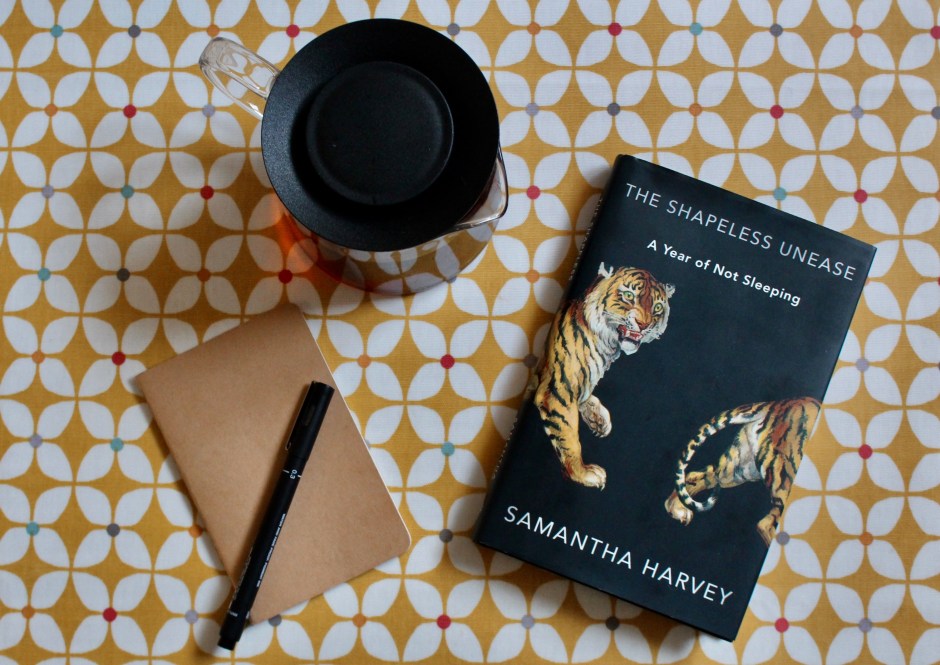
Book Review: The Shapeless Unease

I didn’t have any expectations when I opened The Shapeless Unease: A Year of Not Sleeping, by Samantha Harvey. I had not previously read any of her novels. I simply heard Harvey talking about the book on a podcast (available here if you’re interested) and decided that I would give it a go. The book, described by the London Review as a ‘philosophical memoir’, revolves around the author’s struggle with insomnia, which began suddenly and lasted over a year. It is about many other things – a ‘startingly insightful exploration of memory, writing and influence, death and grief, and the will to survive’, according to the book jacket – but insomnia is the central motif.

Continue reading “Book Review: The Shapeless Unease”

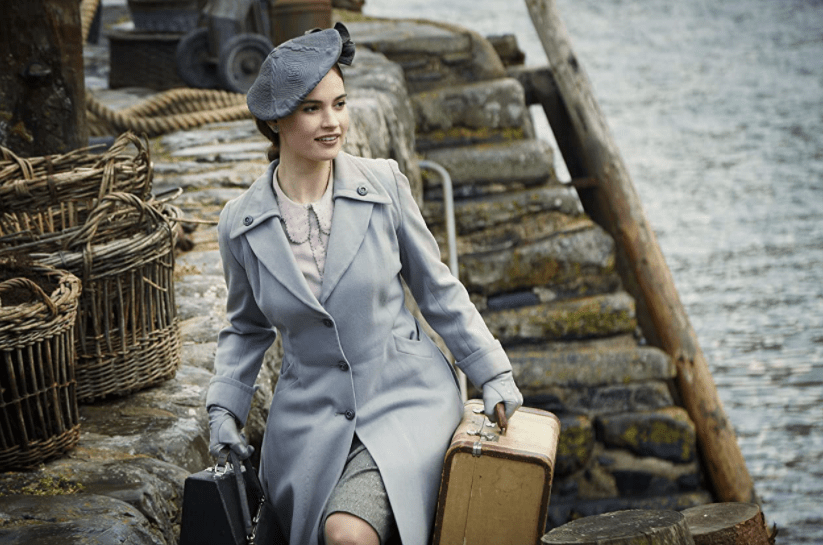
From Book to Film: The Guernsey Literary and Potato Peel Pie Society

As far as I can remember, I’ve always been interested in film adaptations of books. I will walk into a cinema (or, more recently, open a streaming platform) full of expectation, convinced – although the evidence suggests otherwise – that the film will somehow reflect exactly my own understanding of the book. Maybe it will even transcend it.

I have, on occasion, been proven right (Joe Wright’s adaptation of Atonement is an all-time favourite, and don’t get me started on the BBC’s adaptation of Pride and Prejudice) but more often than not, I am disappointed. I have a vivid memory of sitting in the theatre for the first Harry Potter film, having made the mistake of re-reading the book a short time before; I was in a perfect position to notice every difference, every detail that had been changed, every funny line of dialogue the writers had decided, for some incomprehensible reason, not to include. Why? I wondered disconsolately as we left the cinema. Why would they do this?

Continue reading “From Book to Film: The Guernsey Literary and Potato Peel Pie Society”